Define the line and its loading
Walk the proposed fence line and note turns, gaps for vehicle gates, changes in elevation, and proximity to traffic flows. Long straight runs along distribution lots see higher wind loading than short, staggered layouts behind buildings. Tall barricade lines near stadium work or healthcare expansions may require additional site-stability factors and careful panel orientation.
Surface and footing
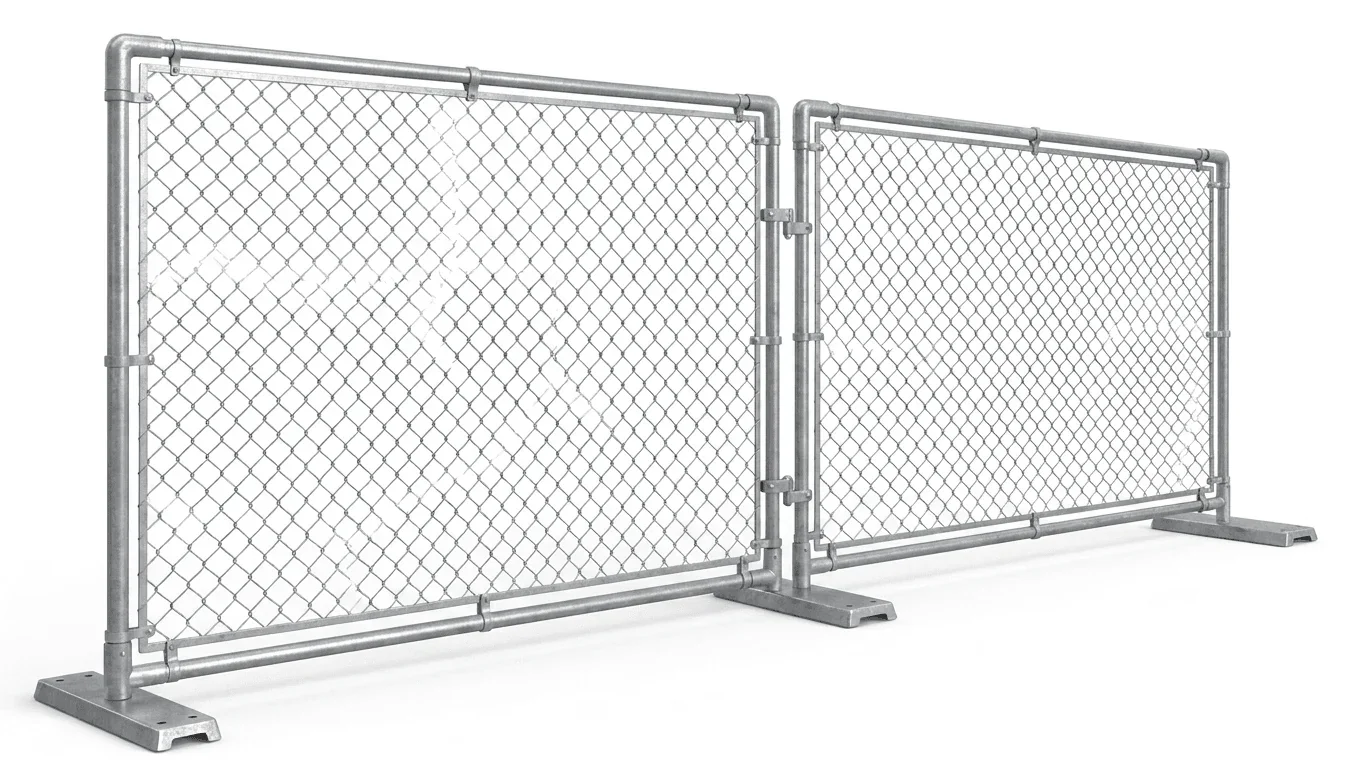
Sandy “Type C” ground has limited holding power for posts. For freestanding panels, base size and weight matter more than on firm slab. On pavement, weighted bases avoid penetrations and speed reconfiguration. Transitions between sand and slab along the same run may need mixed base styles to keep the line uniform.
Climate and corrosion
Humidity and salt‑air exposure accelerate surface oxidation on hardware, especially near open yards. Compare finishes and connector quality when panels stay up for extended durations. Where pedestrian control is the primary goal, lower‑profile barricades with stable feet reduce trip risks in tight aisles.
Access points and equipment interaction
Gate placement should align with delivery routes for lifts and material handling. If aerial work passes over a fenced area, plan clearances for /telescopic-boom-lift-rental/ swing or /articulating-boom-lift-rental/ outreach, and maintain buffer zones according to site procedures. For interior staging near racking, coordinate with /vertical-mast-lift-rental/ for narrow aisles.
Actual conditions and site procedures govern perimeter setups and any elevated work near them.
Quick spec checkpoints
- Panel height vs. wind exposure
- Base type and site-stability factors for sand or slab
- Gate width for trucks, telehandlers, and forklifts
- Finish/coatings for humid environments
- Visibility needs: screening, signage, or clear lines for traffic
Explore related site products at /products/ or coordinate a layout window at /contact/.